
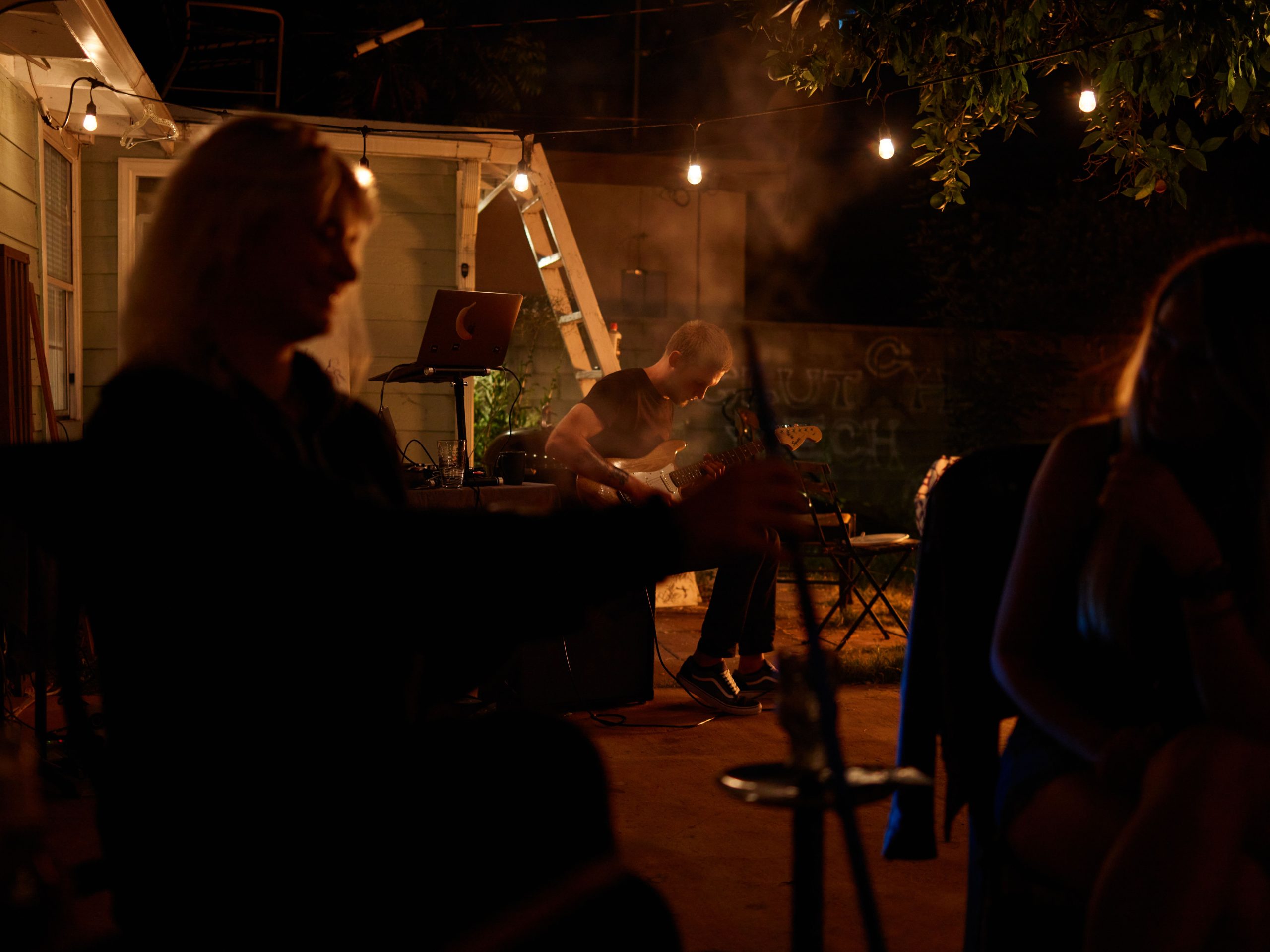
An outdoor music lounge should not feel like a living room that happened to be carried outside. It has different acoustic behavior, different safety demands, and a different social rhythm. Wind, hard paving, nearby walls, insects, glare, and the distance between the speaker and the listener all change the experience.
The most successful spaces are designed around one simple idea: people should be able to listen comfortably without feeling that the technology is running the room. That means choosing the listening zone first, then solving sound, shelter, lighting, and power around it.
Table of Contents
- Start with how the lounge will be used
- Build the layout around listening, not decoration
- Make outdoor sound feel balanced
- Plan for weather and power before installation
- Use lighting to support the music
- Keep the space comfortable for neighbors and guests
- A final design checklist
- Frequently Asked Questions
Start with how the lounge will be used
Before choosing furniture or equipment, decide what “music lounge” means in your household. A space for low-volume playlists needs a different layout from one used for acoustic guitar, karaoke, or occasional small gatherings.
Write down the most common use case and one occasional use case. For example:
- Everyday listening: quiet background music while talking, reading, or eating.
- Focused listening: a small group seated toward a defined sound source.
- Live or participatory music: room for a performer, instruments, and people facing one another.
- Party mode: wider coverage, stronger lighting controls, and a clear path for serving food and drinks.
My preference is to design for everyday listening first. A lounge that only works when the volume is high is usually compensating for poor placement, too much open space, or a speaker aimed at the wrong people. Occasional louder events can be handled with a temporary speaker or a change of seating without making every normal evening feel like a performance.
Build the layout around listening, not decoration
Choose a primary listening zone and a secondary conversation zone. They can overlap, but they should not compete. Place the main seating where guests can see one another without twisting around a fire pit, planter, or oversized coffee table. Then give the audio system a clear line of sight to the center of that group.
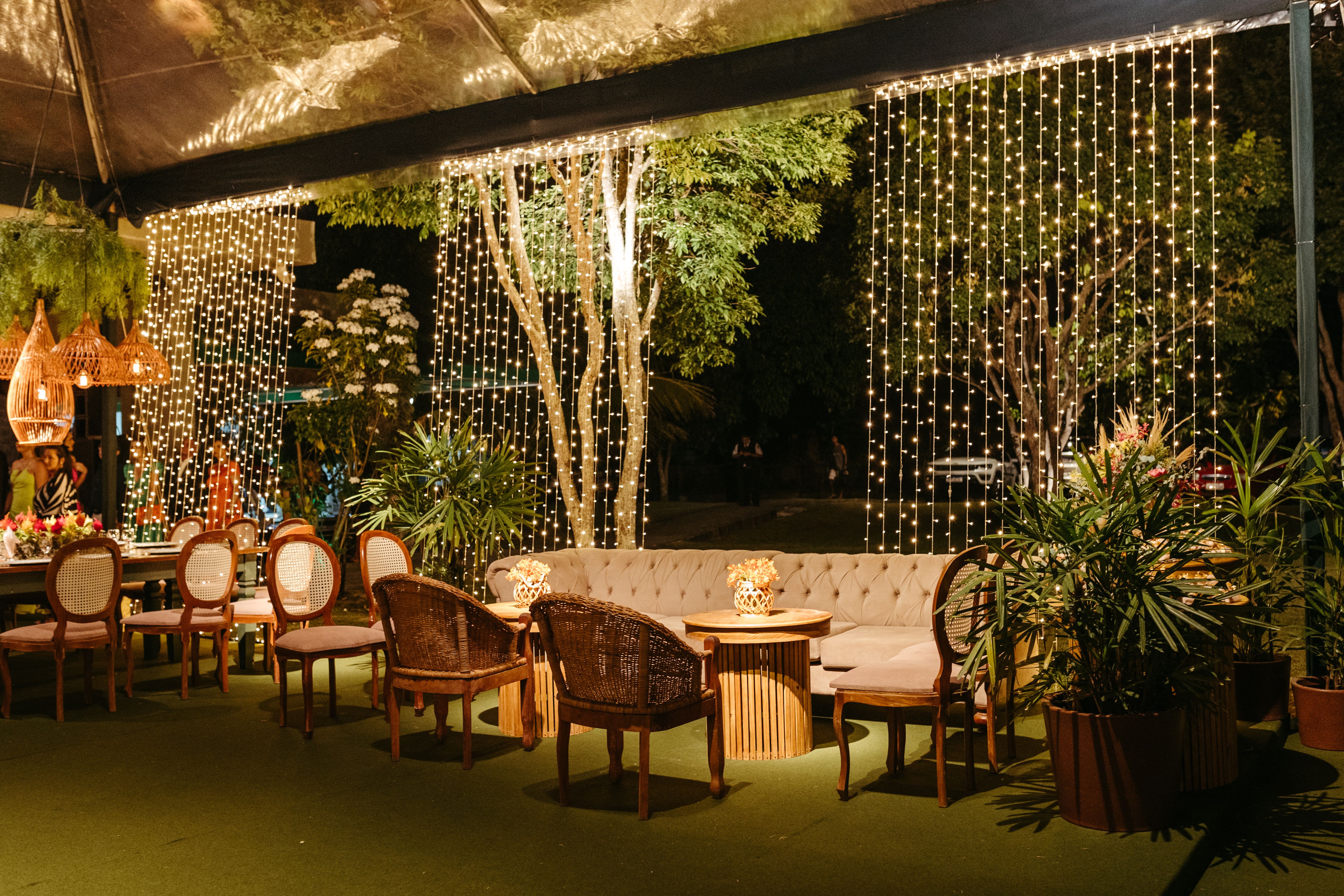
Use these layout rules as a starting point:
- Keep the main seats close enough for conversation; outdoor spaces often make people spread out farther than they realize.
- Avoid placing the speaker directly behind the person who controls the music.
- Keep a clear walking route from the house to the seating, especially if cables, heaters, or drinks are involved.
- Position the most comfortable seats where the sound is even, not only where the view is best.
- Leave enough space to remove cushions and portable equipment quickly when weather changes.
A low-backed arrangement usually works better than tall, enclosing furniture when the goal is shared listening. If the lounge is also meant to feel private, use planting, screens, or a partial canopy at the perimeter rather than putting a high barrier immediately between the speaker and the audience.
Make outdoor sound feel balanced
Outdoor sound loses the reflections that make an indoor room feel full. At the same time, patios often contain hard surfaces that create sharp, distracting reflections close to the listener. The result can be thin sound at one seat and harsh sound at another.
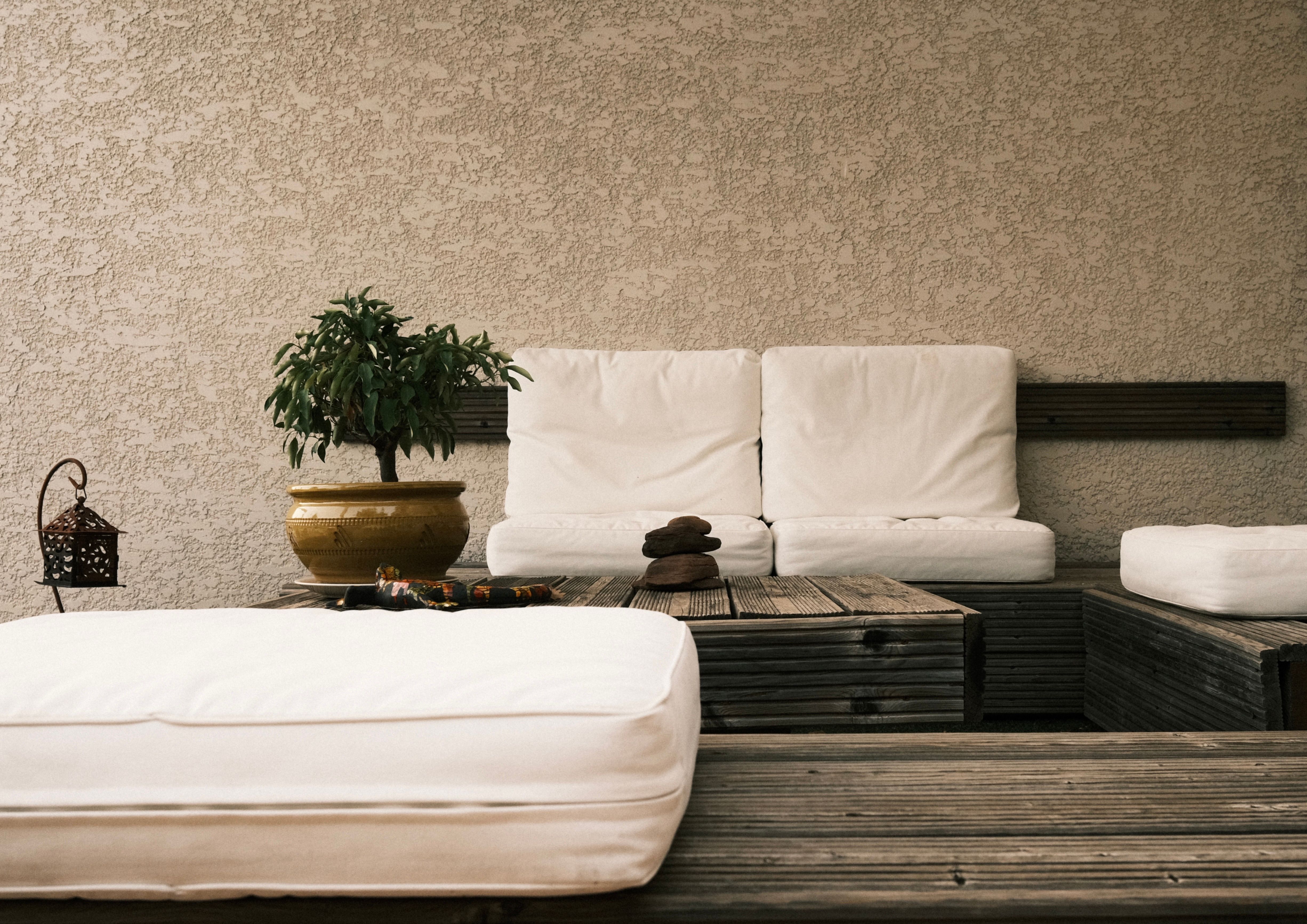
Start with even coverage rather than maximum volume. A pair of modest speakers spaced around the seating area often feels more relaxed than one loud unit aimed from a corner. Keep the speaker at roughly ear height when seated, angle it toward the listening zone, and test it from the farthest regular seat before making a final decision.
Hard walls and fences can reflect sound toward a house or neighboring property. If the lounge sits beside a masonry wall, use a little distance and add irregular, absorbent elements such as planting, outdoor curtains, upholstered cushions, or a slatted screen. These will not “soundproof” the garden, but they can reduce the sense that music is bouncing from one flat surface to another.
The Acoustical Society of America’s work on outdoor amplified music describes the problem as a combination of system design, monitoring, barriers, landscaping, and changing atmospheric conditions. That is a useful corrective to the common idea that buying a more powerful speaker solves everything. In a home setting, the practical translation is simple: control the source, aim it carefully, and avoid using volume to cover a layout problem.
Speaker choices for three common layouts
| Layout | Best starting arrangement | Why it works | Main caution |
|---|---|---|---|
| Compact balcony or small patio | One small weather-suitable speaker near the seating, aimed across rather than outward | Keeps the sound close to the people using the space | Do not aim toward an open boundary or a reflective wall |
| Rectangular lounge | Two speakers along the long sides or at opposite ends, played at moderate level | Improves coverage without making one seat excessively loud | Check that the two speakers are coordinated and not creating an obvious echo |
| Performance-style garden area | Defined performer position with audience seating facing it; use temporary equipment when possible | Separates listening direction from general circulation | Plan volume, power, and local noise restrictions before an event |
The table is a planning guide, not a substitute for the instructions and weather rating of the particular equipment you choose.
Plan for weather and power before installation
Outdoor equipment fails less dramatically than people expect. It is usually the repeated cycle of moisture, heat, dust, condensation, and hurried storage that causes trouble. Select equipment intended for the exposure it will actually receive, and distinguish between “splash resistant” and suitable for continuous outdoor mounting.
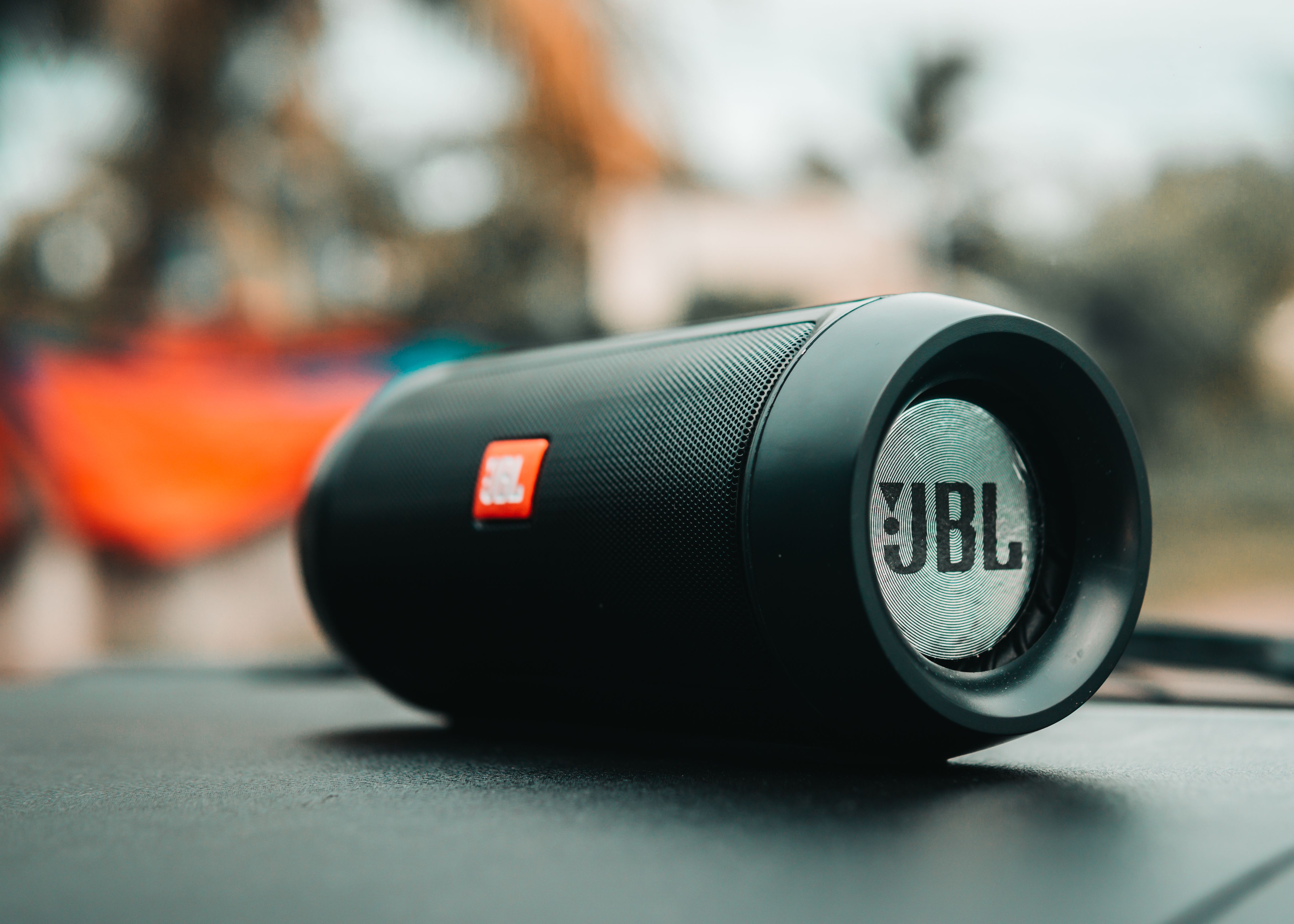
For a permanent setup, ask where water will go, where cables will run, and how a technician could reach the connection later. Put charging and control equipment somewhere dry. Do not hide a power strip under a cushion or leave a charger sitting on a damp floor just because it is out of sight.
The Electrical Safety Foundation International recommends GFCI protection for outdoor outlets, weather-protected covers, and extension cords marked for outdoor use. It also says extension cords are a temporary solution rather than a replacement for permanent wiring. Read the full ESFI guidance on outdoor electrical safety before adding outlets, heaters, lighting, or powered audio.
- Use a qualified electrician for new outdoor circuits or permanently installed outlets.
- Keep plugs, connectors, and power supplies away from standing water and splash zones.
- Do not link extension cords together or run them across walking routes.
- Store portable speakers, microphones, and controllers indoors when they are not rated for exposure.
- Design a dry storage point into the lounge rather than relying on someone to remember to carry everything inside.
Use lighting to support the music
Lighting should make faces readable, steps visible, and the evening feel settled. It should not turn the lounge into a brightly lit stage unless that is deliberately the point.
The U.S. Department of Energy’s exterior-lighting guidance emphasizes useful, targeted light, appropriate distribution, controls, and resistance to dust and moisture. Apply that logic at domestic scale by separating the lighting into layers:
| Lighting layer | Use it for | Good placement | Control |
|---|---|---|---|
| Circulation | Steps, paths, and the route to the house | Low, shielded fixtures beside changes in level | Timer, dusk sensor, or manual switch |
| Conversation | Faces, drinks, and reading | Warm, indirect light near or behind seating | Dimmer or separate scene |
| Accent | Planting, a wall, or an architectural detail | Targeted light aimed at the feature, not at eye level | Short-duration scene or low setting |
| Performance | A performer or temporary activity area | Portable, controllable light used only when needed | Manual control |
Warm light is usually more comfortable for an evening lounge, but color temperature is not the only concern. Glare, brightness, and how long the light stays on matter just as much. The DOE’s exterior lighting guidance is aimed at larger installations, but its underlying lesson carries over: direct light where it is needed instead of flooding every surface.
Keep the space comfortable for neighbors and guests
An outdoor music lounge has an invisible footprint. Music, conversations, light, and late-night movement can all travel beyond the patio. The best time to consider that footprint is before the furniture and wiring make the layout difficult to change.
Put the most active part of the lounge toward the house or toward the side of the property with the greatest separation from neighboring windows. Keep speakers away from corners and boundary walls where reflections can project sound outward. If the space is elevated, take extra care with bass and late-night use because distance alone may not make music unobtrusive.
Boundaries can be useful when they provide privacy, guide movement, and interrupt direct sightlines without creating a hard echo chamber. Depending on the property, that might mean planting, a pergola, a partial screen, or carefully selected balustrades around an elevated deck. The aim is not to seal the garden; it is to make the lounge feel contained and safe while preserving airflow and a clear view.
Before hosting a louder evening, check local rules about amplified sound and quiet hours. Then do a short listening test from the property edge and, if appropriate, let nearby neighbors know what to expect. That small act is more effective than assuming a premium speaker will somehow sound considerate by itself.
A final design checklist
Walk through the space in daylight, then repeat the check after dark. A design that looks resolved at noon can reveal glare, blocked paths, or awkward controls once the music starts.
- Is there one obvious primary listening area?
- Can everyone in that area see and hear one another comfortably?
- Are the speakers aimed at people rather than property lines?
- Can portable equipment be moved indoors quickly?
- Are outdoor outlets GFCI-protected and weather-protected?
- Are cables out of walking paths and away from water?
- Can you dim the lounge without switching off the path lighting?
- Is there a dry place for cushions, chargers, microphones, and controllers?
- Would the layout still work if the music were turned off?
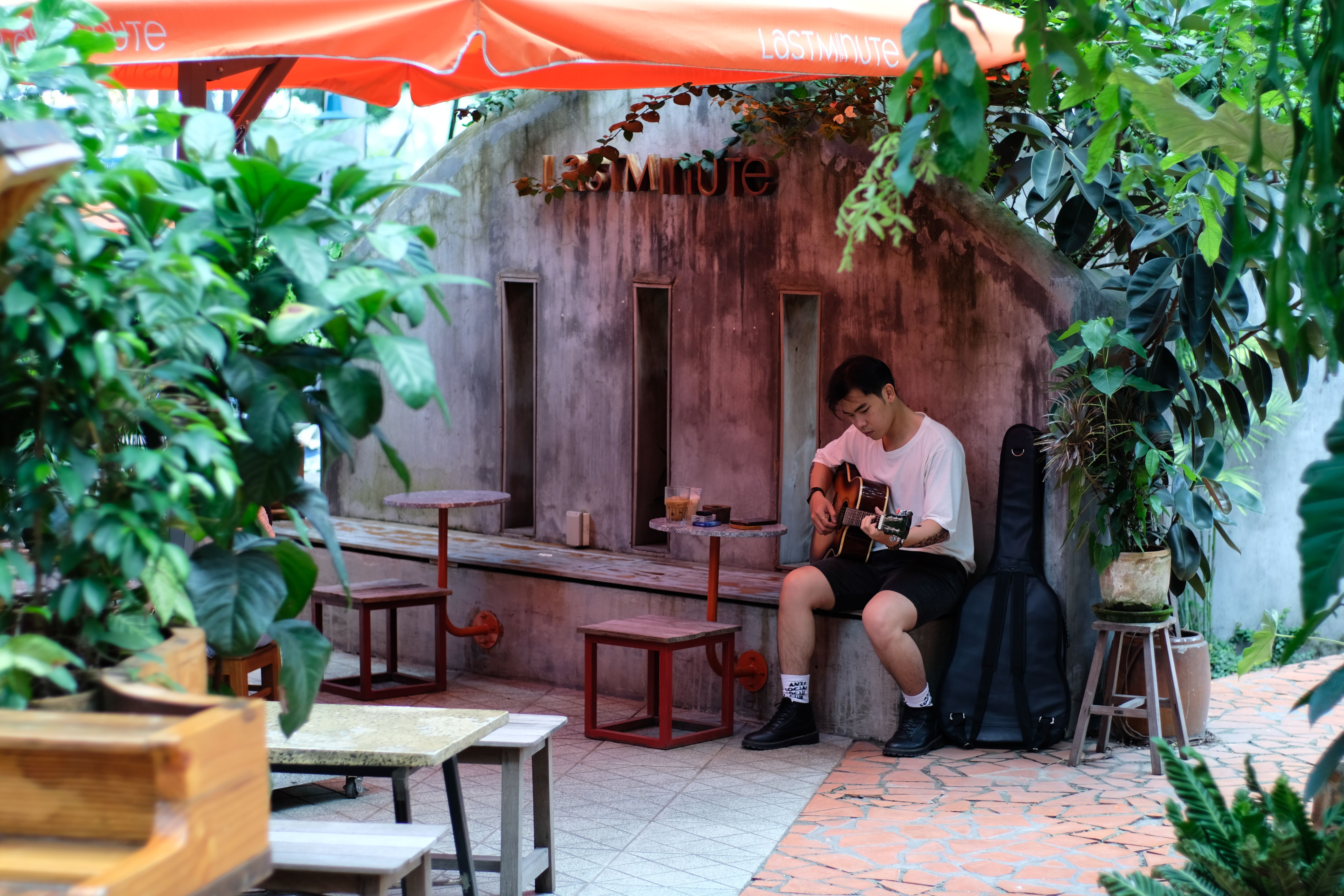
The last question is the one I would keep. Music should deepen the purpose of the lounge, not become its only purpose. If the space remains inviting for a quiet coffee, a conversation, or an empty evening under the lights, the audio design has done its job.
Frequently Asked Questions
1. What is the best place to put outdoor speakers?
The best place is usually close enough to the primary seating that the system can play at a moderate level, aimed across the listening zone rather than toward a property boundary or hard corner. Test the sound from the farthest regular seat before fixing the position.
2. Do outdoor music lounges need a roof?
Not always. A roof or pergola improves shade, equipment protection, and rain planning, but an open lounge can work well with portable equipment and a clear storage routine. Any permanent electrical or mounted audio equipment should be selected for its actual exposure and installed according to local requirements.
3. How can I reduce echo on a patio?
Break up large, hard, parallel surfaces with planting, outdoor textiles, cushions, timber screens, or other irregular elements. These changes reduce harsh reflections; they do not fully soundproof the space. Speaker placement and lower volume are usually more important than adding decorative materials alone.
4. Should outdoor lighting be bright for a music lounge?
No. Use enough light for safe movement and comfortable conversation, then keep accent and performance lighting separate. Dimming, timers, and targeted fixtures help prevent glare and unnecessary light spilling beyond the lounge.
5. Can I use an extension cord for outdoor speakers and lights?
Only as a temporary measure and only when the cord is rated for outdoor use, correctly matched to the equipment, protected from water, and kept out of walking routes. For a permanent lounge, have a qualified electrician plan suitable outdoor power instead of treating extension cords as fixed wiring.
A lounge that knows when to be quiet
The strongest outdoor music spaces are not the ones with the most equipment. They are the ones where seating, sound, light, weather protection, and boundaries have been considered as one experience.
Start with the people, keep the sound close, make power boring and safe, and give the lighting enough restraint to let the evening take over. When the design is right, the music feels present without demanding attention, which is exactly what a home lounge should do.