
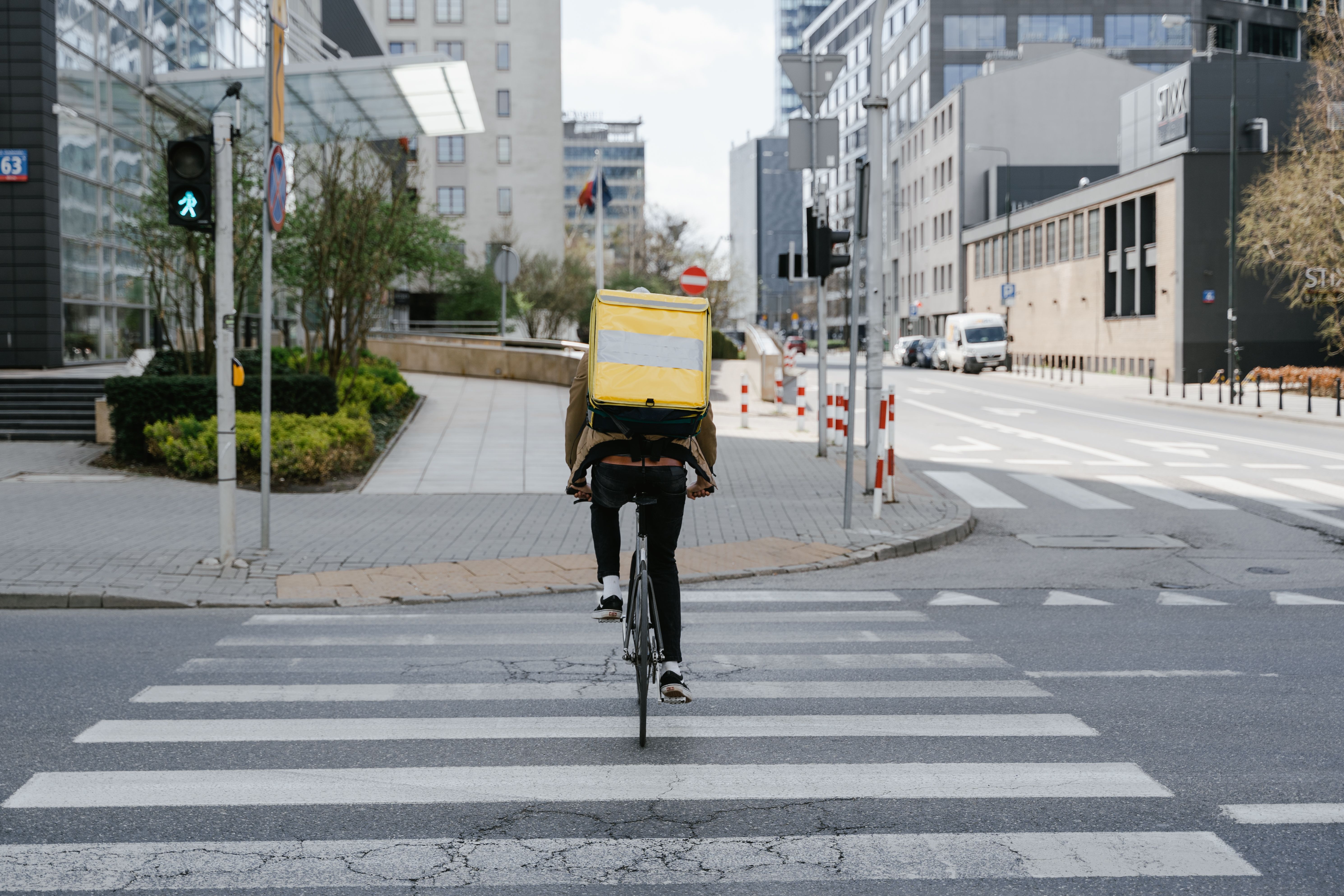
For many students, “a job” no longer means a fixed shift behind a counter. It might mean delivering food between seminars, editing a video at midnight, selling design work online, tutoring over a video call, or taking occasional hospitality and event bookings. The side hustle has become less a second job than a second operating system.
That distinction matters. The gig economy is often sold as freedom: choose your hours, work from anywhere, stop when you have earned enough. In student life, however, flexibility can quietly become permanent availability. A free afternoon is no longer empty time; it is an opportunity cost.
The student job has become harder to count
Eurostat’s 2024 figures show that education and employment overlap most strongly at ages 20 to 22, when 19.7% of young people in the EU were simultaneously in formal education and the labour market. That number includes ordinary part-time jobs, not just app-based work, but it captures the new normal: students are studying and earning at the same time rather than moving cleanly from one stage to the next.
Platform work is smaller than the loudest headlines suggest. In Eurostat’s 2022 pilot survey across 17 EU and EFTA countries, 3.0% of people aged 15 to 64 reported at least one hour of digital platform employment in the previous year. The share was higher among 15-to-29-year-olds, at 3.6%. Yet its cultural impact is larger than its headcount because platforms teach students to think of income as a stream of small, individually managed tasks.
That can be genuinely useful. A student who cannot commit to a weekly shift may be able to accept a translation, a delivery slot, or a short photography booking. Online freelancing can also turn coursework skills into a portfolio before graduation.
The hidden cost is not always money
The overlooked expense is cognitive. Students must constantly switch between learner, seller, driver, creator, and customer-service representative. A bad week is not simply “less productive”; it can mean missed reading, delayed assignments, and sleep sacrificed to work that was supposed to be flexible.
There is also a classification problem. A student may call themselves a student even while working regularly, while a platform may classify them as self-employed. The International Labour Organization’s overview of digital labour platforms describes the trade-off plainly: platforms open new routes to income while existing alongside serious decent-work deficits.

The work is not always digital, either. Student income increasingly sits in an informal middle ground: tutoring, nightlife promotion, personal assistance, content creation, and private services. Some students even investigate an escort service München as part of that broader market for highly flexible, personal work. That choice raises questions ordinary “side hustle” advice tends to skip: privacy, safety, consent, reputation, and whether the income is worth the boundary it crosses.
What should students protect first?
My view is simple: a side hustle is only flexible if the student can leave it without losing control of their week. Before accepting work, define a maximum number of hours, a minimum acceptable rate after travel and unpaid admin, and a rule for exam periods. Keep records of payments and expenses, and check local tax and employment rules rather than assuming an app has handled them.
Most importantly, protect blocks of unmonetised time. The point of earning while studying is to support education, not to turn every gap between lectures into a saleable slot.

The gig economy is reshaping student life less by replacing campus jobs than by dissolving the boundary around them. The next student advantage will not be squeezing more tasks into a day. It will be knowing which opportunities deserve a yes, and which ones are simply renting access to your attention.
How this article was researched
This article draws on Eurostat’s 2024 analysis of young people’s participation in education and work, Eurostat’s 2022 pilot data on digital platform employment, and the ILO’s current platform-work materials, checked in October 2026. The available surveys do not isolate every kind of student side hustle, especially informal personal services, so those activities are discussed as examples rather than measured trends.